Validate incoming data
Statisticians write and test validation rules against sample datasets, without waiting for a developer.


Platform
Write, version and run VTL rules in production, as a team and with governance.
VTL, the Validation and Transformation Language maintained by the SDMX community, lets statisticians write validations and transformations in business terms.
In practice the scripts end up scattered across folders and spreadsheets, versions drift, nobody can say which version ran last quarter or who changed a rule, and one engineer becomes the bottleneck for every change.
The VTL Suite turns VTL into a shared, governed process: the people who own the methodology write the rules, and IT runs them with control.
What it is for
Statisticians write and test validation rules against sample datasets, without waiting for a developer.
Aggregates, ratios and other transformations written once, in VTL, and run the same way every period.
Projects and versions show who changed which rule and when, and which version produced a published figure.
Trigger VTL runs from your own systems through REST APIs, with orchestrated tasks.
Who it is for
Owners of SDMX and VTL pipelines at central banks, statistical offices and international organisations.
The people who know what a rule should check, and can now write and test it themselves.
Teams that must run rules in production with versioning, reproducibility and integration.
How it works
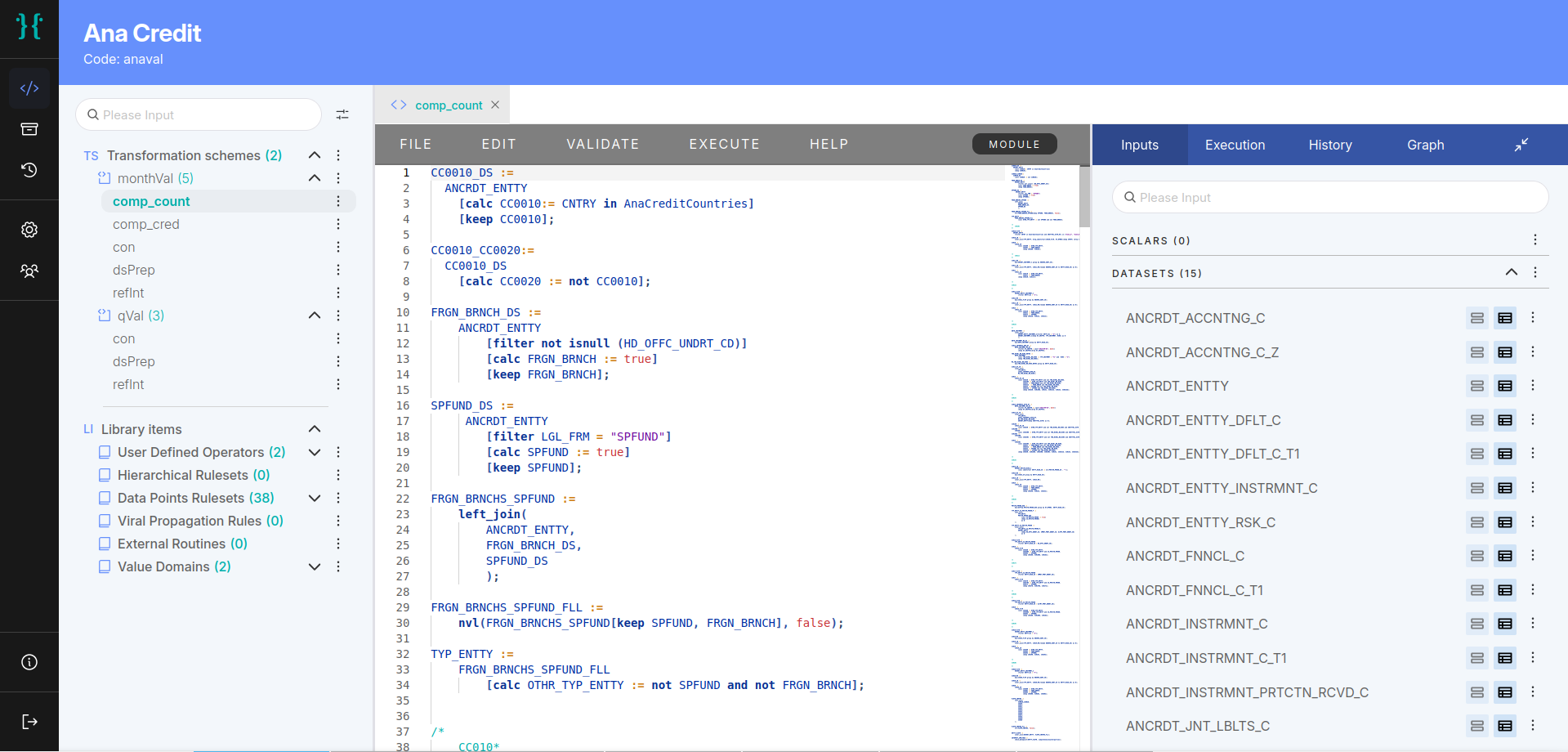
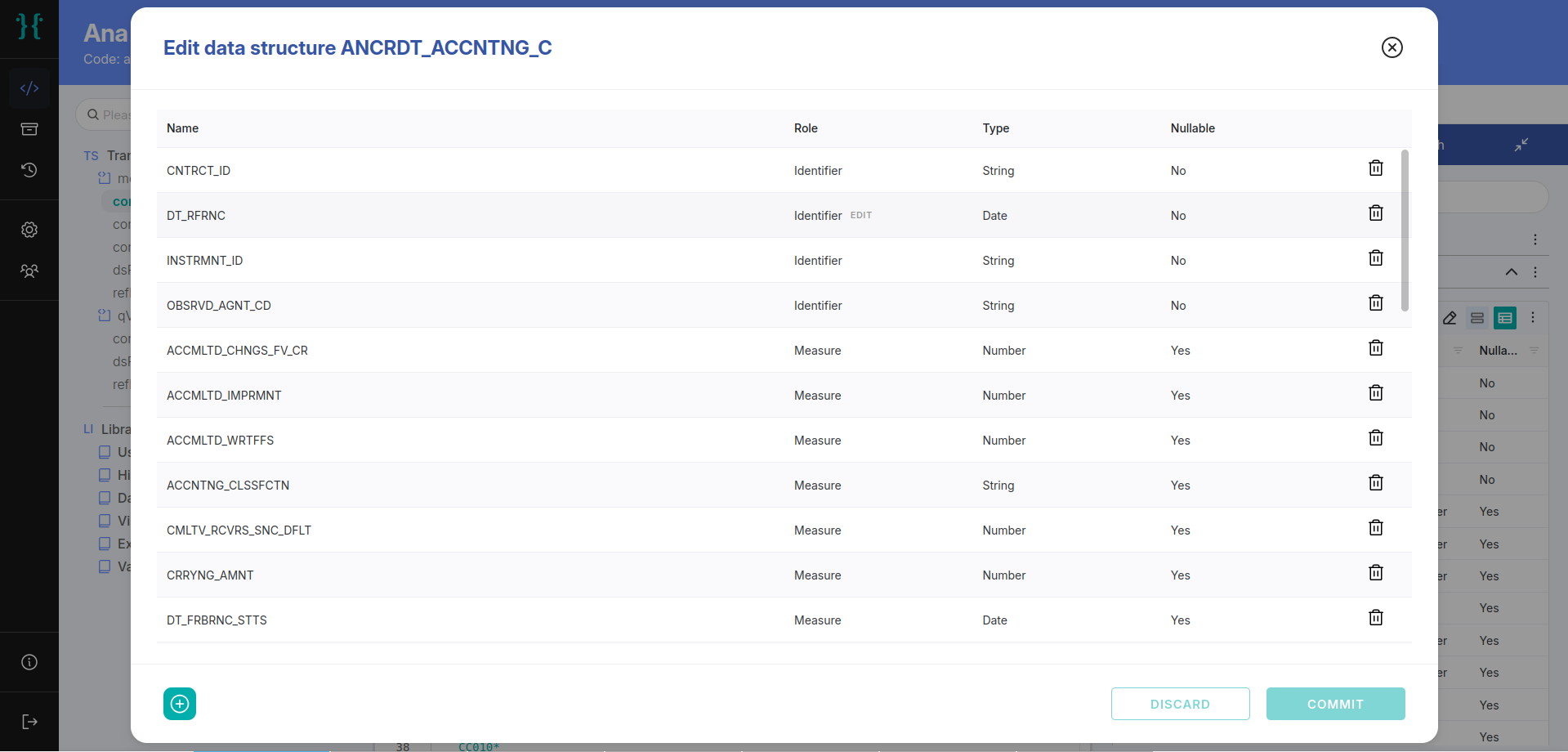
In VTL Playground, with a preview of the datasets the rule works on.
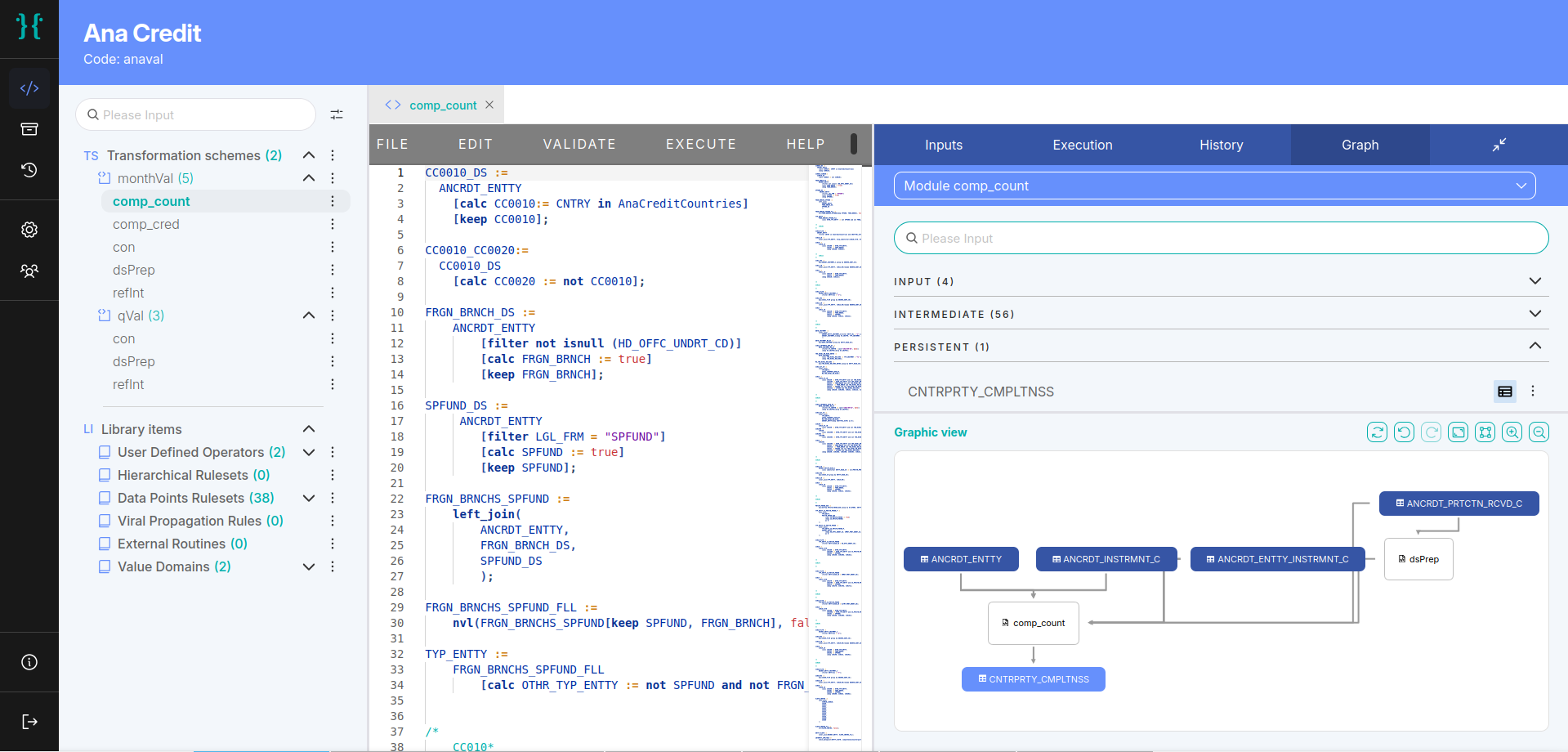
Scripts live in projects with versions, in VTL Manager.
Changes follow your governance before they reach production.
Through REST APIs, with task orchestration; a run can be repeated and gives the same result.
Questions
The Validation and Transformation Language, a standard maintained by the SDMX community. It expresses validations and transformations of statistical data in terms that subject-matter experts can read.
Two reasons: time to production, and standards expertise that is hard to hire. And the standard protects you: what you write in the Suite is VTL, so it does not tie you to us.
The Suite is built for SDMX-based data production, and its REST APIs let your pipelines and external systems run VTL. We also co-develop pysdmx, the Python SDMX library, with the BIS.
On your premises or as a managed service.
We can help you with both.
Salamanca
Calle Concejo 9 1º D
37002 Salamanca
Madrid
Calle Fernando El Católico 86 posterior local C-12
28015 Madrid